Here’s a fact most people don’t realize: FedEx made over $1.5 billion in operating income in a single quarter… while the U.S. Postal Service continues to lose money year after year.
That contrast alone should make you pause.
Because it raises a bigger question—one that goes way beyond shipping and logistics:
Why do we keep believing government-run operations can outperform private ones?
Let’s talk about what’s happening right now in New York City.
There’s a plan on the table—led by Zohran Mamdani—to spend about $70 million building five government-run grocery stores. That’s roughly $14 million per store.
Now think about that for a second.
Private companies like ALDI can open multiple stores for that same amount of money—without subsidies, without taxpayer backing, and with a business model that actually has to work.
So what’s really going on here?
This Isn’t About Groceries
Let’s be honest—this isn’t really about food access.
It’s about control vs. efficiency.
Private grocery stores survive on razor-thin margins. That means they have no choice but to get really good at:
• Managing supply chains
• Pricing competitively
• Moving inventory quickly
• Running lean operations
If they don’t? They fail. They close. They disappear.
That’s the discipline of the market.
Now Compare That to Government Operations
A government-run store doesn’t play by those same rules.
If it underperforms, it doesn’t shut down.
It gets more funding.
There’s no real consequence for inefficiency—and that changes everything.
Because once you remove accountability, you remove the very thing that forces systems to improve.
Incentives Drive Everything
Think about it this way:
ALDI wakes up every day with one mission:
Deliver quality food at the lowest price—or lose customers.
That pressure creates innovation. It creates efficiency. It creates results.
Now flip that to a government-run grocery store.
What’s the goal?
• It’s not profit.
• It’s not efficiency.
• It’s not even necessarily customer satisfaction.
• It’s process. It’s budget compliance. It’s politics.
And when those become the priorities… performance almost always takes a hit.
Who Actually Wins Here?
On paper, this sounds like it’s helping underserved communities.
But let’s do the math.
$70 million → 5 stores.
That’s not scale. That’s not transformation.
Now imagine a different approach:
• Give tax incentives to private grocers
• Reduce zoning restrictions
• Make it easier to open stores
Instead of 5 stores, you could get 50 or more.
• More competition.
• Lower prices.
• Better access.
That’s how markets solve problems—through scale, not centralization.
The Slippery Slope No One Talks About
Here’s where it gets bigger than groceries.
If the government starts running grocery stores… what’s next?
Retail?
Distribution?
Logistics?
At some point, you stop filling gaps in the market—and you start replacing the market entirely.
And history is pretty clear on how that plays out:
• Costs go up
• Efficiency goes down
• Innovation slows to a crawl
Let’s Be Clear About One Thing
This isn’t about being against helping people.
Everyone agrees—food access matters.
The real question is:
What’s the best way to solve it?
Do we:
• Build scalable, competitive systems that naturally improve over time?
Or:
• Rely on centralized systems funded by taxpayers, with no real pressure to perform?
Because that $70 million?
It’s not just money spent.
It’s opportunity lost.
Final Thought
Right now, New York City is choosing a model that has consistently underperformed compared to the private sector.
And that’s the part that should concern you.
Because if the goal is:
• Better access
• Lower prices
• Real impact
Then maybe the answer isn’t more control…
Maybe it’s getting out of the way of systems that already work.
So what do you think?
Should we double down on government-run solutions…
or empower the private sector to do what it already does better?
About the author
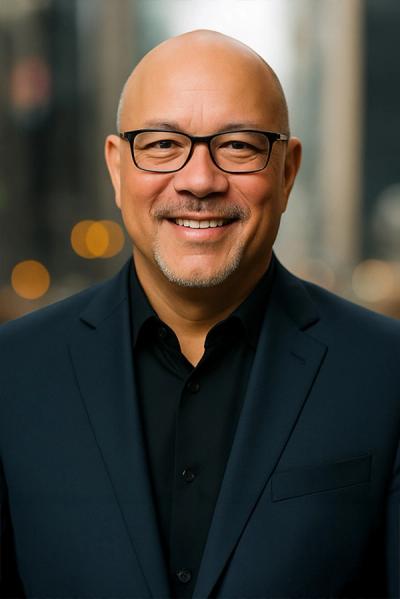
Alan Wozniak, CEC, CIAQP, CIEC — Founder, 10XCoach.ai
Alan Wozniak, CEC, CIAQP, CIEC, is a nationally recognised business architect, executive coach, entrepreneur, and 4-time INC. 5000 CEO with more than 30 years of experience helping business owners accelerate growth, improve profitability, and increase business value. He founded and grew Pure Air Control Services into one of America's fastest-growing companies, achieving 370% growth in four years before successfully leading its acquisition by a Fortune 500 corporation. Today, Alan serves as President of Business Health Matters, an executive coaching firm dedicated to helping business owners build healthier, more profitable, and more valuable companies. He is also the founder of MarketWell Solutions, a done-for-you digital marketing team that provides websites, branding, SEO, CRM automation, AI-powered marketing, and lead generation services for small and mid-sized businesses. In addition, he founded 10XCoach.ai, an innovative AI business coaching platform that combines executive coaching expertise with artificial intelligence to provide business owners with 24/7 strategic guidance and accountability. Alan is the author of the Amazon best-selling book The Small Business BIG EXIT: How to Build a Healthy Small Business and Exit BIG and the forthcoming So You HATE Selling: Here's What To Do Instead, which introduces his proven 7-Step Prescriptive Sales Process™. He is also a Newsweek contributor on business coaching and executive development, a sought-after keynote speaker, and a trusted business strategist whose mission is to help entrepreneurs build stronger companies, create lasting enterprise value, and achieve meaningful long-term success.