Fact: According to McKinsey research, companies with standardized operating systems and repeatable business processes consistently outperform their competitors in profitability and long-term growth. Great products attract customers—but great systems keep them coming back.
That's a lesson every entrepreneur should heed.
Most people assume Starbucks became a global giant simply because it makes great coffee.
It doesn't hurt.
But coffee alone didn't build more than 40,000 stores worldwide.
Starbucks built something much bigger.
They built a system.
Then along came Luckin Coffee, a company that took an entirely different approach.
Instead of trying to recreate the cozy coffeehouse experience, Luckin asked a different question:
"How can we make buying coffee as fast and effortless as ordering a ride on your phone?"
Their answer changed everything.
Today, millions of customers order through a mobile app, skip the line, pick up their drink, and continue with their day. The experience is designed around convenience, speed, technology, and habit.
Two companies.
Two very different strategies.
One powerful lesson.
Systems scale faster than products.
Starbucks Built an Experience
Walk into almost any Starbucks in the world.
The smell.
The music.
The menu.
The customer greeting.
The ordering process.
The consistency.
Whether you're in Seattle, Singapore, London, or Dubai, you know what to expect.
That doesn't happen by accident.
It's the result of thousands of documented systems, operating procedures, employee training programs, quality standards, and customer experience playbooks.
Starbucks didn't just build coffee shops.
They built a repeatable business model.
Luckin Coffee Built Speed
Luckin Coffee looked at the same market and reached a completely different conclusion.
Instead of asking customers to stay longer...
They asked how to help customers get what they wanted faster.
Digital ordering.
Minimal waiting.
Convenient pickup.
Affordable pricing.
Mobile payments.
Data-driven promotions.
Habit-building rewards.
Their stores became fulfillment centers rather than neighborhood cafés.
Different model.
Same principle.
A system was doing the heavy lifting.
The Lesson Isn't About Coffee
Whether you prefer Starbucks or Luckin really doesn't matter.
What matters is understanding why they've both become incredibly successful.
Neither company depends on one amazing employee.
Neither depends on the founder being present every day.
Neither relies on hope.
They rely on systems.
That's what allows thousands of locations to deliver consistent results every single day.
Why This Matters Across Africa—and Everywhere Else
I spend a lot of time speaking with business owners.
Whether I'm talking with entrepreneurs in Kenya, South Africa, Nigeria, Ghana, the United States, or Europe, I hear the same frustrations.
"We have a great product."
"Our customers love us."
"We work harder than our competitors."
Yet revenue stalls.
Growth slows.
Stress increases.
Why?
Because the product usually isn't the problem.
The business system is.
Many companies struggle with:
- Inconsistent customer experiences
- Manual processes that waste time
- Slow response times
- Poor lead follow-up
- No reliable reporting
- Limited use of business data
- Employees waiting for the owner's approval
- Owners working 70-hour weeks just to keep everything moving
Sound familiar?
That's not a product issue.
That's a systems issue.
Customers Buy Confidence
Business owners often believe customers buy quality.
Quality matters.
But today, customers also buy something else.
They buy confidence.
They want to know you'll answer the phone.
Deliver on time.
Keep your promises.
Solve problems quickly.
Make doing business easy.
That's why reliability often beats brilliance.
Convenience beats complexity.
Consistency beats occasional excellence.
The companies that win are the ones customers can depend on again and again.
The Owner Shouldn't Be the Operating System
One of the biggest mistakes entrepreneurs make is becoming the operating system of their own business.
Every decision goes through them.
Every approval.
Every customer complaint.
Every invoice.
Every sales question.
Every hiring decision.
Eventually, the owner becomes the bottleneck.
The business can't grow because everything depends on one person.
That's exhausting.
And it's not scalable.
Real businesses grow when knowledge moves from the owner's head into documented systems that everyone can follow.
This Is Where 10XCoach.ai Changes the Game
At 10XCoach.ai, we believe every small business deserves access to the kind of systems that large organizations have spent decades developing.
That's why we created more than an AI coach.
We created a Business Operating System.
Instead of reacting to problems, business owners can proactively build a stronger company through structured execution.
The platform helps organizations:
- Create repeatable operating systems
- Assign and track accountability
- Run productive team meetings
- Measure execution with discipline scores
- Monitor business performance across every department
- Build action plans that don't disappear after the meeting ends
- Receive AI-powered coaching 24 hours a day
The goal isn't simply to work harder.
The goal is to build a business that keeps working—even when you're not in the room.
From Hustle to Structure
For years, entrepreneurs have been told that success comes from grinding harder.
Work longer.
Sacrifice more.
Do everything yourself.
That mindset might help you start a business.
It won't help you scale one.
The next generation of successful businesses will look very different.
They'll use automation intelligently.
They'll leverage AI responsibly.
They'll make decisions using data instead of guesswork.
They'll create systems that allow their teams to perform consistently.
And they'll spend less time fighting fires because the business is designed to prevent them.
The Real Competitive Advantage
Whether you're running a coffee shop in Nairobi, a manufacturing company in Johannesburg, a consulting firm in Atlanta, or a construction business in Tampa, the principle is exactly the same.
Products will always have competitors.
Prices can always be matched.
Technology can always be copied.
But a well-designed business system is much harder to replicate.
That's your competitive advantage.
That's how businesses become scalable.
That's how owners regain their freedom.
That's how companies increase profitability and long-term value.
So the next time you walk into a Starbucks—or order from Luckin Coffee—don't just notice the coffee.
Notice the system behind it.
Because products compete.
Systems create predictable growth.
And that's the difference between owning a business...
...and building one that can thrive for years to come.
Ready to Build a Business That Runs on Systems, Not Stress?
Take the first step with 10XCoach.ai and discover how AI-powered coaching and a proven Business Operating System can help you move:
- From hustle → to structure
- From survival → to scalability
- From working in the business → to building a business that works for you
Start your FREE 14-day trial today at www.10XCoach.ai and experience the future of business coaching.
About the author
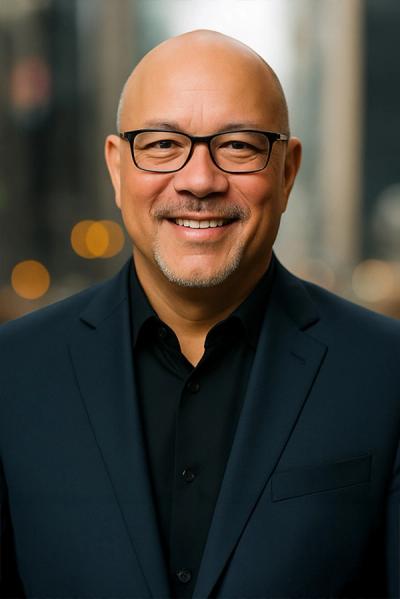
Alan Wozniak, CEC, CIAQP, CIEC — Founder, 10XCoach.ai
Alan Wozniak, CEC, CIAQP, CIEC, is a nationally recognised business architect, executive coach, entrepreneur, and 4-time INC. 5000 CEO with more than 30 years of experience helping business owners accelerate growth, improve profitability, and increase business value. He founded and grew Pure Air Control Services into one of America's fastest-growing companies, achieving 370% growth in four years before successfully leading its acquisition by a Fortune 500 corporation. Today, Alan serves as President of Business Health Matters, an executive coaching firm dedicated to helping business owners build healthier, more profitable, and more valuable companies. He is also the founder of MarketWell Solutions, a done-for-you digital marketing team that provides websites, branding, SEO, CRM automation, AI-powered marketing, and lead generation services for small and mid-sized businesses. In addition, he founded 10XCoach.ai, an innovative AI business coaching platform that combines executive coaching expertise with artificial intelligence to provide business owners with 24/7 strategic guidance and accountability. Alan is the author of the Amazon best-selling book The Small Business BIG EXIT: How to Build a Healthy Small Business and Exit BIG and the forthcoming So You HATE Selling: Here's What To Do Instead, which introduces his proven 7-Step Prescriptive Sales Process™. He is also a Newsweek contributor on business coaching and executive development, a sought-after keynote speaker, and a trusted business strategist whose mission is to help entrepreneurs build stronger companies, create lasting enterprise value, and achieve meaningful long-term success.