Fact: According to the U.S. Small Business Administration, poor cash flow management is one of the leading reasons businesses fail. Ironically, many profitable companies don't go out of business because they lack customers—they fail because they run out of cash.
That's exactly what happened to one of America's most recognizable brands.
Yes... 7-Eleven.
The company that introduced us to the Slurpee.
The Big Gulp.
The convenience store on practically every corner.
Yet today, America's largest convenience store chain is controlled by a Japanese company.
How did that happen?
The answer has very little to do with convenience stores—and everything to do with smart business.
It Started With a Simple Licensing Deal
Back in 1973, 7-Eleven licensed its brand to a Japanese retailer called Ito-Yokado.
Most companies would have simply copied the American model.
Not Ito-Yokado.
Instead, they asked a smarter question:
"How can we make this even better?"
They transformed the concept.
Fresh meals delivered daily.
Bill payment services.
ATM banking.
Package pickup.
Tax payments.
Everyday essentials designed around the customer.
7-Eleven became more than a convenience store.
It became part of everyday life in Japan.
While the American company largely stayed the same, the Japanese operation kept improving, innovating, and adapting.
One company was maintaining.
The other was evolving.
Then Everything Changed
Fast forward to 1987.
America was booming.
Leveraged buyouts were everywhere.
Debt was cheap.
Confidence was high.
The founding family decided to take 7-Eleven private by borrowing an enormous amount of money.
On paper, it looked brilliant.
Until it wasn't.
Only months later...
Black Monday hit.
The stock market suffered one of the largest single-day crashes in history.
Credit markets tightened.
Banks stopped lending.
Suddenly, the debt that once fueled growth became an anchor.
The business itself wasn't broken.
Customers still walked through the doors.
Revenue still came in.
But the company had become financially fragile.
And when the storm arrived, it couldn't survive it.
Guess Who Was Ready?
Remember Ito-Yokado?
While the U.S. company struggled under massive debt, the Japanese partner had done something incredibly important.
They had built a stronger business.
They had protected their balance sheet.
They had cash.
When opportunity knocked, they answered.
Ito-Yokado acquired control of 7-Eleven for roughly one-tenth of what the company had been worth only 18 months earlier.
The original owners walked away owning just 5%.
The lesson?
Sometimes you don't lose because your business is bad.
You lose because your business isn't prepared.
Debt Isn't the Enemy
Let's be clear.
Debt isn't inherently bad.
Many successful businesses use financing wisely.
Debt can help you:
• Expand faster
• Purchase equipment
• Hire key employees
• Acquire competitors
• Invest in technology
• Increase profitability
Used responsibly, debt is a powerful accelerator.
But debt also magnifies risk.
Every monthly payment reduces flexibility.
Every loan assumes tomorrow will look like today.
The problem?
Business rarely works that way.
Markets change.
Customers change.
Technology changes.
Interest rates change.
Unexpected events happen.
The companies that survive aren't always the biggest.
They're the ones prepared for uncertainty.
Smart Business Owners Build Resilience
One of the biggest differences between average businesses and extraordinary businesses is resilience.
Resilient companies don't rely on hope.
They rely on systems.
They know their numbers.
They measure performance.
They maintain healthy cash reserves.
They improve operations before problems appear.
They create predictable sales processes.
They build strong teams.
They prepare long before a crisis ever arrives.
That's exactly why executive coaching exists.
Not because business owners aren't smart.
But because even the smartest leaders develop blind spots.
The Real Question Isn't "How Fast Can I Grow?"
It's...
"Can my business survive the next storm?"
Growth without discipline is dangerous.
Revenue without profit creates stress.
Sales without operational systems create chaos.
And debt without strategy creates vulnerability.
The healthiest businesses grow intentionally.
They understand that long-term success isn't measured by today's sales.
It's measured by tomorrow's options.
The Businesses That Win Think Differently
At Business Health Matters, we often say that healthy businesses don't happen by accident.
They happen by design.
The healthiest companies consistently evaluate eight critical areas:
• Business Strategy
• Sales
• Marketing
• Customer Experience
• Operations
• Financial Performance
• Team Culture
• Exit Readiness
When one area weakens, the others eventually feel the impact.
A business can look successful on the outside while quietly becoming fragile underneath.
That's why regular assessments matter.
Just as you wouldn't ignore your personal health for years, you shouldn't ignore your company's health either.
Business Intelligence Is Your Competitive Advantage
Today's business environment changes faster than ever.
Artificial intelligence.
Automation.
Economic uncertainty.
Changing consumer behavior.
Increasing competition.
Business owners can no longer rely on instinct alone.
They need real-time insights.
They need accountability.
They need better decision-making.
That's exactly where 10XCoach.ai changes the game.
Instead of waiting weeks or months to speak with a coach, business owners have access to an AI-powered business coaching platform available 24/7.
Whether you're wrestling with pricing, improving sales, strengthening culture, refining operations, or preparing your company for an eventual exit, your AI coaches are always available to help you think more clearly and make better decisions.
It's like having an experienced executive coaching team available whenever you need guidance.
Don't Wait for Your Black Monday
Every business eventually encounters challenges.
The companies that survive aren't necessarily the smartest.
They're the ones that prepared before the crisis arrived.
7-Eleven's story isn't really about convenience stores.
It's about leadership.
Preparation.
Financial discipline.
Continuous improvement.
And making decisions today that protect tomorrow.
That's a lesson every business owner can apply.
Ready to Get Smarter About Your Business?
If you want to build a healthier, stronger, and more valuable company, start by understanding where you stand today.
Take the FREE Business Success Quiz from 10XCoach.ai and receive an instant business assessment with practical insights across the eight key pillars of business success.
Then, if you're ready to accelerate your growth, connect with Business Health Matters – Executive Coaching for personalized guidance designed to help you build a business that's profitable, resilient, and ultimately exit-ready.
About the author
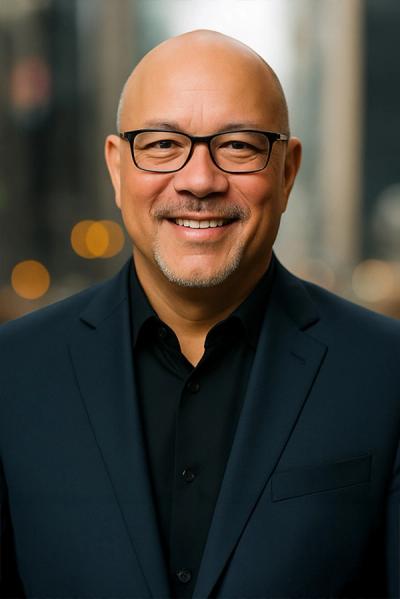
Alan Wozniak, CEC, CIAQP, CIEC — Founder, 10XCoach.ai
Alan Wozniak, CEC, CIAQP, CIEC, is a nationally recognised business architect, executive coach, entrepreneur, and 4-time INC. 5000 CEO with more than 30 years of experience helping business owners accelerate growth, improve profitability, and increase business value. He founded and grew Pure Air Control Services into one of America's fastest-growing companies, achieving 370% growth in four years before successfully leading its acquisition by a Fortune 500 corporation. Today, Alan serves as President of Business Health Matters, an executive coaching firm dedicated to helping business owners build healthier, more profitable, and more valuable companies. He is also the founder of MarketWell Solutions, a done-for-you digital marketing team that provides websites, branding, SEO, CRM automation, AI-powered marketing, and lead generation services for small and mid-sized businesses. In addition, he founded 10XCoach.ai, an innovative AI business coaching platform that combines executive coaching expertise with artificial intelligence to provide business owners with 24/7 strategic guidance and accountability. Alan is the author of the Amazon best-selling book The Small Business BIG EXIT: How to Build a Healthy Small Business and Exit BIG and the forthcoming So You HATE Selling: Here's What To Do Instead, which introduces his proven 7-Step Prescriptive Sales Process™. He is also a Newsweek contributor on business coaching and executive development, a sought-after keynote speaker, and a trusted business strategist whose mission is to help entrepreneurs build stronger companies, create lasting enterprise value, and achieve meaningful long-term success.